Risks and Opportunities: AI Is Reshaping the Art Ecosystem

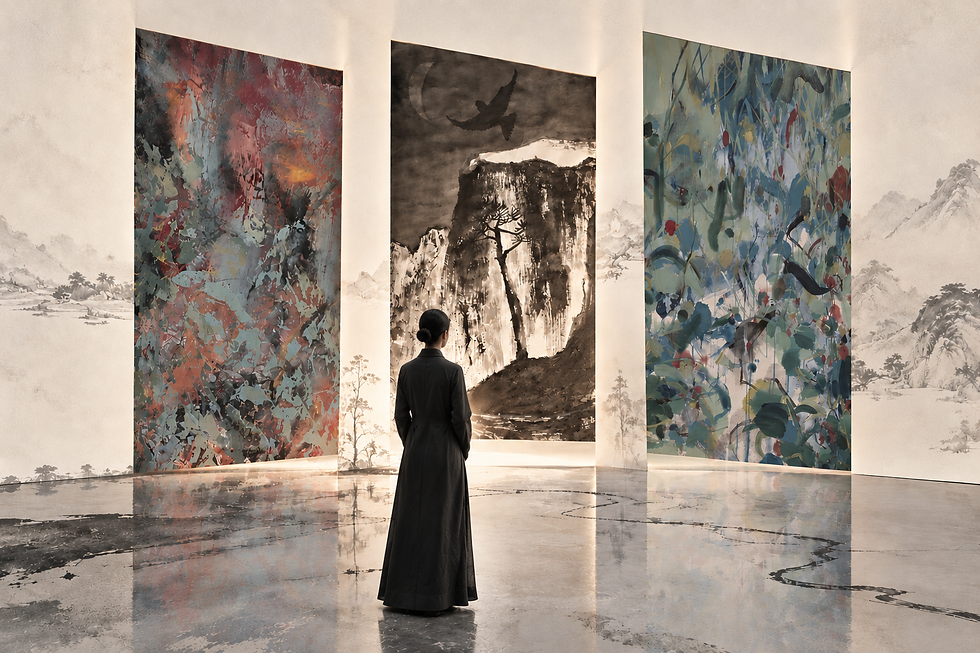
Lately, I’ve been discussing how Chinese art can find its place in the contemporary world. But the rapid rise of AI has made me realize that we may need to rethink the question itself.
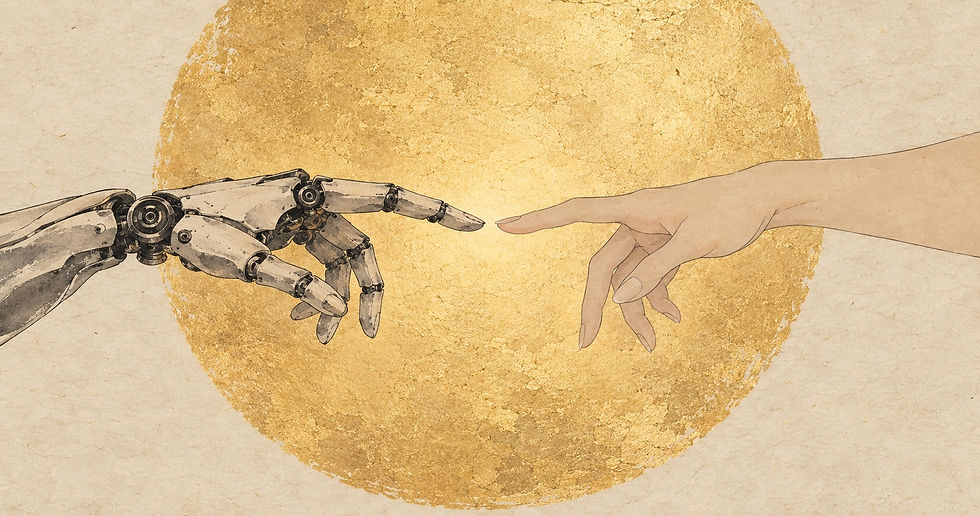
There is growing debate about whether AI could develop consciousness. I don’t know whether it has anything resembling human awareness. But what I do see is its increasing ability to respond to our aesthetic preferences and create images and music that move us emotionally.
Although I wasn’t a fan of the film 牛来, hearing an AI rendition of its ending song made me realize that artistic expression is no longer a field where humans have the stage entirely to themselves.
This challenges many of the standards we have traditionally used to judge artists—especially the emphasis on innovation in contemporary art.
An artist might spend ten or twenty years developing a distinctive visual language. AI can now generate a similar visual effect in seconds, tailored to someone’s tastes or emotional needs.
That forces us to ask: when visual innovation becomes widely available, where does the value of art come from?
I am certainly not saying that AI will end human art. I believe it is pushing us to reconsider what art does and how we judge its value.
Over the next decade, choosing which artists to support may become one of the most important questions facing galleries, curators, critics, and art schools.
My view is that audiences will need to encounter more than the artwork itself. They will need to encounter the person behind it: a sustained practice, an underlying artistic logic, cultural roots, and lived experiences that belong to that individual.
And the work must give those qualities a tangible form. The artist’s life and ideas should help us understand the work, while the work should give substance to what the artist says.
A personal story alone is not enough. Neither is a distinctive look.
When separated from the person who created it, even a striking visual style becomes increasingly easy to reproduce.
For Chinese art, this means that engaging with the contemporary world requires more than innovation in form. Artists need to bring cultural meaning and personal depth into their work—and make those qualities meaningful to people today.
Building a public presence matters, too. Not simply to gain followers, but to help people understand the work, connect with it, and discover what it can contribute to their lives.
Ultimately, art needs to reach beyond the art world. It needs to offer experiences that help people reflect, feel, question, and connect.
This era presents a challenge to every artist, but it also opens up possibilities. How we build a meaningful relationship with the public will become an essential part of artistic practice.